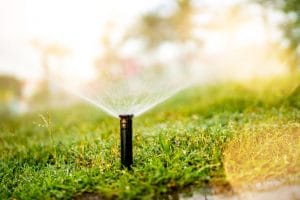
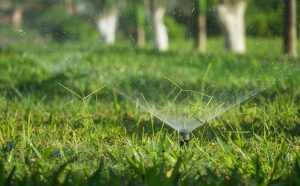
August is almost over, and your irrigation system has been working hard since spring startup. That’s months of daily cycles, heat exposure, lawn-mowing traffic, and the general wear and tear that comes with a busy Minnesota summer. And with the hottest, driest stretch of the season still in full swing, right now is exactly the wrong time for your system to be underperforming.
A quick mid-season checkup can catch small problems before they become big ones — saving your landscape, your water bill, and your wallet.
Here are five things every Minnesota homeowner should look at right now.
1. Walk Each Zone and Watch It Run
Most homeowners never do it after spring startup. Set your controller to run each zone manually, then go outside and watch it operate. You’re looking for:
- Broken or tilted heads that are spraying sideways, straight up, or not at all
- Clogged nozzles that are producing an uneven or weak spray pattern
- Heads spraying pavement — driveways, sidewalks, and streets instead of your lawn or beds
- Sunken heads that have settled below grade and can’t pop up fully
- Misting or fogging from heads operating at too high a pressure, which dramatically reduces efficiency
Any of these issues means your system isn’t applying water the way it was designed to — and your landscape is paying the price. A single broken head can leave a dry streak across your lawn that looks like drought stress even when the rest of the zone is running fine.
2. Check Your Controller Settings
When did you last check your controller program? If the answer is “spring startup” — or worse, “last year” — it’s time for a review.
By August, your irrigation schedule should reflect peak summer demand. That means:
- Run times should be at their longest of the season to compensate for heat and evaporation.
- Watering days should be frequent enough to keep up with Minnesota’s summer ET rates.
- Start times should run in the early morning hours—ideally between 4 and 7 AM—to minimize evaporation and reduce disease pressure.
Also check that your seasonal adjust or water budget setting hasn’t been accidentally bumped down. Many homeowners don’t realize this feature exists, and a controller set to 50% output is only delivering half the water your landscape actually needs.
If you have a smart controller, you can confirm it’s still connected to its weather data source and that the ET-based adjustments are working correctly.
3. Look for Wet Spots, Soggy Areas, and Unusually Green Patches
While you’re walking your yard, watch for areas that seem wetter than they should be—especially between watering cycles. Soggy areas, sunken turf, or patches that stay green when everything around them is starting to show heat stress can all signal a leak.
Irrigation leaks come in several forms:
- Lateral line leaks underground, where a fitting has separated or a line has been nicked by an aerator or edger
- Valve leaks that cause a zone to seep water slowly even when it’s not scheduled to run
- Weeping heads where the check valve inside the head has failed, allowing water to drain out after each cycle
A leaking system doesn’t just waste water — it can lead to soggy turf, root disease, and erosion. And because many leaks happen underground or at night when the system runs, homeowners often don’t notice them until they see an unusually high water bill.
If your water usage has spiked this summer without an obvious explanation, a leak is a very likely culprit.
4. Evaluate Your Coverage — Especially in Problem Areas
Take a hard look at your lawn and landscape for dry spots, uneven color, or areas that consistently look stressed even when the system is running. These are coverage gaps — areas that aren’t receiving adequate water due to:
- Poor head spacing that leaves gaps between spray patterns
- Obstructions — shrubs, perennials, or ornamental grasses that have grown up and are blocking spray patterns since the system was last adjusted
- Misaligned heads that have been knocked out of position by foot traffic, mowing, or frost heave
- Pressure issues that prevent rotors from completing their full arc
Summer plant growth is a common and overlooked culprit. A landscape bed that was wide open in May can be completely blocking head coverage by August. If your plants have filled in significantly since spring, re-evaluate whether your heads still reach their intended targets.
5. Test Your Rain Sensor
Minnesota law requires a rain sensor or soil moisture sensor on all new irrigation systems — and for good reason. A functioning rain sensor prevents your system from running during or after rainfall, saving significant water and preventing overwatering.
But rain sensors can fail, and many homeowners don’t know whether theirs is actually working. Here’s a quick test:
- Locate your rain sensor — it’s typically mounted on a roof edge, fence, or other exposed location
- Manually activate your irrigation system
- Hold a hose or cup of water over the sensor and wet the sensing disc thoroughly
- Your system should shut off within a minute or two if the sensor is working correctly
If it doesn’t stop running, your sensor may have failed, been disconnected, or been bypassed and never reconnected. A non-functioning rain sensor means your system is running through every rainstorm — exactly the kind of waste that adds up fast on a summer water bill.
Also check that the sensor hasn’t been obstructed by new plant growth or debris since it was last inspected.
When to Call a Professional
Many attentive homeowners can do a mid-season checkup on their own. But if your walkthrough turns up broken heads, suspected leaks, coverage gaps, or a controller program that’s hard to navigate, calling a certified irrigation professional is the smart move.
Catching and correcting problems in August — while the growing season still has two months to run — gives your landscape the best chance to finish the season strong.
Minnesota Irrigation Is Here to Help
Don’t wait until you see a dead patch or an unexplained spike in your water bill. Minnesota Irrigation offers mid-season irrigation inspections and tune-ups to keep your system performing at its best through the end of the season. It’s also the perfect time to get your system ready for winterization and make sure it is ready for the next year.
Contact us today to schedule your mid-season checkup or fall blowouts/winterization — your lawn will thank you.